

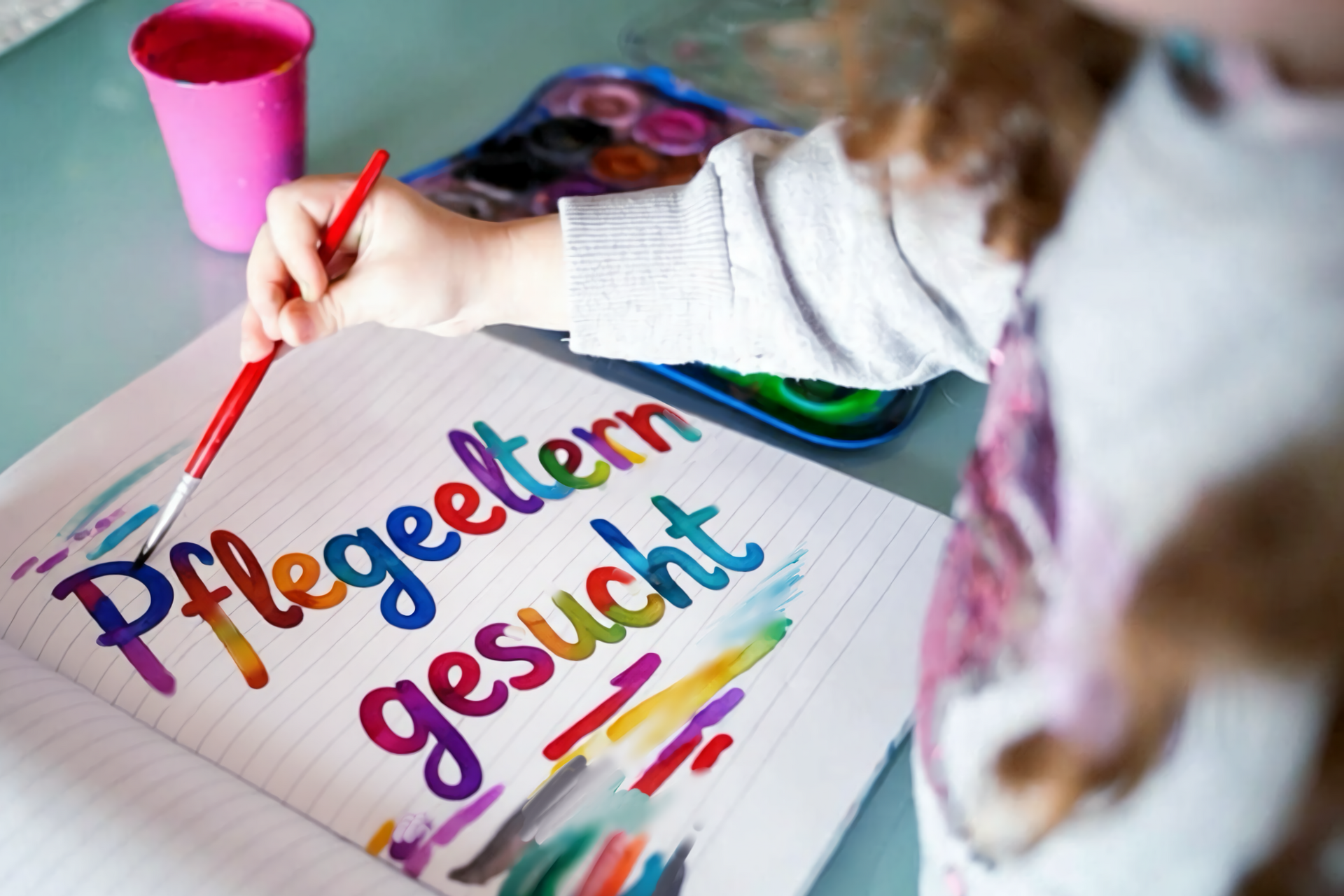
We are looking for foster homes / foster families
We are looking for a foster home for the children and people who would like to take on this important task. We are there to accompany, advise and support the foster homes/foster families.
Children need reliability, stability, patience and understanding. Children need people who take time for them and get involved with them in order to give them a good start in life.
If you are interested in this responsible task, please contact us. We will advise you without obligation, free of charge, answer your questions and listen to your thoughts.
It is important to us:
As the City of Salzgitter's foster care service, it is particularly important to us:
- The return of the child should always be sought
- Foster homes are complementary families - foster children grow up with two families
- The child and its needs are the focus
- That's why we look for the right family for the foster child (and not the other way around)
There are many reasons why children are temporarily unable to live with their parents. During this time, children need a safe place where they are accepted for who they are.
Foster children are not adopted children, even if they live permanently in another family. They retain their kinship ties to their family.
Foster children always remain the children of their biological parents.
The foster family provides support where the biological parents cannot ensure the upbringing and care of the child themselves.
The foster family must be prepared to work together with the biological parents, for example in order to maintain contact with them.
The placement of children/young people in a foster family should not last longer than necessary.
The city of Salzgitter recognizes this task financially and supports you with a monthly care allowance.
In addition, we are available to advise, accompany and support you.
Do you have any questions?
Then get in touch with us!
We can advise you in person or by telephone.
Location
Stadt Salzgitter
Adoptions- und Pflegekinderwesen
Joachim-Campe-Straße 6-8
38226 Salzgitter (Lebenstedt)
Contact us
Forms of educational assistance or full-time care
In the following, we will give you a brief outline of the diverse tasks of educational assistance in accordance with the Eighth Social Code (SGB VIII) and our activities.
There are different forms of full-time care (according to § 33 SGB VIII.):
A brief overview is given here:
| Short-term care: | the legal guardians are absent for a short time, for example due to illness, no educational assistance is required |
| On-call care: | A temporary placement, usually as part of a crisis intervention or child welfare threat |
| Kinship care/network care: | Placement of the child with relatives/acquaintances |
| Full-time care: |
Temporary and permanent placements with diverse and varying educational needs of foster children. The aim is always to return to the biological family. |
Residential care in a home is an emergency solution in the area of educational assistance in accordance with the German Social Code (SGB VIII): If, for example, the provision of basic care for the children in the family is no longer guaranteed; there is a possible risk to the child's welfare and/or no foster family can be found.
General requirements for recognition as a full-time care facility (in accordance with § 33 SGB VIII)
- Married couples, couples (including same-sex couples) and individuals who can offer the children a continuous relationship.
- It should be possible to reconcile the applicant's professional activity and the care of the children according to their age. Flexible solutions such as working from home and parental leave should be possible.
- Applicants should have a regular income and orderly financial circumstances; there must be no dependence on care allowance.
- The living conditions must offer sufficient space for the children to develop. Retreat options in the form of a separate room should be available.
- Applicants are prepared to cooperate openly with the specialist service for children, youth and family, other institutions involved and the family of origin.
- All family members and the social environment are positive about taking in a foster child.
- Sufficient mobility to be able to maintain contact with specialists, therapists, schools, institutions, contact with relatives, etc.
- Interest in specialist knowledge, willingness to undergo further training and supervision
- Completed qualification course
The application procedure
Same-sex couples as well as patchwork families, single people and single parents can take in a foster child. The same criteria are applied to all applicants.
The application procedure takes place in a cooperative, transparent consultation process. Several detailed interviews are held with the applicants.
To become a foster carer, you should fulfill the following requirements/submit the following documents. Forms for applying for the verification documents will be given to you by the team of the foster children's service during the first consultation.
- Completed qualification course (6-7 evenings of 3 hours each)
- Proof of income/financial independence
- Extended police clearance certificate for all people over 18 living in the household
- Medical examination by the local health authority
- Curriculum vitae in tabular form
- Detailed life report with photo
- Schufa credit report
- Declaration of consent to data collection, data transfer and release from confidentiality vis-à-vis other adoption/foster child placement agencies, youth welfare offices and the foster child services of independent organizations
- Various documents and forms
- Participation in a first aid course for children on or before taking in a child
As a rule, several home visits take place in which we engage in a transparent, cooperative discussion. This is usually carried out by two members of staff from the Foster Children's Service.
Note: All applicants have a right to be checked as a foster carer, but not to a foster child.
The foster care service is there for you:
We offer you within our cooperation:
- Advice, guidance and support for foster homes/foster families
- Assistance with problems
- Developing perspectives for children/young people and families
- Offers for supervision* and further training
- Qualification course
- Group meetings for foster children
- Organization of joint events for foster families (regulars' table, foster children's festival)
(*Whatis supervision?
Foster parents play an important role in youth welfare. In order for foster parents to be able to fulfill this extremely demanding and challenging task well, they generally need professional advice and support in the form of supervision. Supervision offers a "view from above" in the true sense of the word.
In a protected environment, you can reflect on your own behavior, thoughts and feelings with regard to the changed situation, the foster child and the family of origin. New advice and courses of action can be developed in the supervision process.
In the context of social work, supervision originally served to reflect on the relationship between social workers and clients. With the support of the supervisors, solutions are also developed for issues that you as foster parents experience as problematic. Supervision can take place at different locations, as:
- Individual supervision,
- group supervision,
- team supervision).
Care permit
General information
Persons who take a child/young person into their household for longer than 8 weeks require a care permit (in accordance with §44 SGB VIII).
This does not apply to persons who are related to the child/young person up to the third degree by blood or marriage. Likewise, a stepparent who takes care of their stepchild in their own household does not require permission.
Likewise, persons who take in a child as a guardian or carer with a corresponding share of custody or as part of a child-raising assistance program do not require permission.
Prerequisites:
The youth welfare office at the caregiver's place of residence is responsible for issuing the care permit.
All caregivers have a right to advice from the local youth welfare office (in accordance with Section 37a, Social Code Book 8 (SGB VIII), where they can receive comprehensive information and ask questions.
This is not an official form of educational support. Irrespective of this, the team advises and supports the caregivers and is the point of contact for any questions. In addition, the specialist service for children, young people and families offers free advice on various issues (link may be available).
Maintenance must be ensured by the legal guardians/parents.
A care permit cannot be issued if the welfare of the child would be endangered.
The caregiver is obliged to inform the specialist service of any serious changes.
Necessary:
The following is required for the issue of a care permit:
Necessary documents:
- Extended certificate of good conduct
- Last 3 certificates of earnings
- General practitioner's certificate
- As well as interviews with the responsible specialists of the foster care service and
- at least 1 home visit.
You will receive the necessary forms after the initial interview. Please do not apply for any documents beforehand.
Contact us
Location
Stadt Salzgitter
Adoptions- und Pflegekinderwesen
Joachim-Campe-Straße 6-8
38226 Salzgitter (Lebenstedt)
 read out